East Meets West 2011
aka 東成西就2011 aka Eagle Shooting Heroes 2011

2011 ![]()
Directed by Jeff Lau Chun-Wai

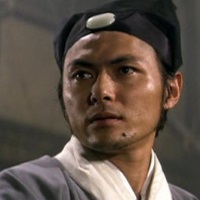
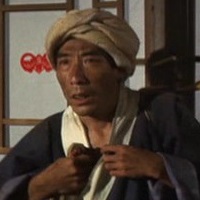
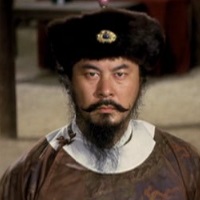
East Meets West 2011 is an update in tone of Jeff Lau’s 1993 film Eagle Shooting Heroes, a classic comedy film that boasted a huge cast (many of whom were borrowed from Wong Kar-Wai’s Ashes of Time, which was running over budget and needed another film to be made with the core cast to balance the books!) and has become one of the mainstay comedy films due to the crazy and energetic feel to the picture. East Meets West 2011 takes inspiration from that, transports the reincarnated gods to modern day, and adds super hero trappings and some philosophical discussion into the mix. And though it isn’t non-stop zaniness, it is still a good time and is one of my favorite recent Hong Kong films.

While Eagle Shooting Heroes/Ashes of Time are largely based on Jin Yong’s Condor Heroes trilogy, East Meets West 2011 instead takes from another of Jin Yong’s wuxia works, Demi-Gods and Semi-Devils. The eight major characters known as the Eight Heavenly Dragons are based on the eight races of non-human entities described in Buddhist cosmology, called Tianlong Babu (天龍八部) the “8 kinds of beings that protect the Dharma” The Eight Races are the Deva, Nāga, Yaksha, Asura, Garuda, Kinnara, Gandharva and Mahoraga. Tianlong 天龍 means Heaven Dragon, but can also translate to deva-nāga “Devas and Nāgas”, the 2 highest categories of tianlong. The lower 6 categories are: yecha 夜叉 “Yaksha; cannibalistic devils; nature spirits”, gantapo 乾闥婆 “Gandharva; half-ghost music masters”, axiuluo 阿修羅 “Asura; evil and violent demigods”, jialouluo 迦樓羅 “Garuda; golden bird-like demons that eat dragons”, jinnaluo 緊那羅 “Kinnara; half-human half-bird celestial music masters”, maholuluojia 摩睺羅迦 “Mahoraga; earthly snake spirits”. And, yes, I ganked all that from Wikipedia.

Jeff Lau’s films are almost always crazy awesome, and he’s very good at bringing Western elements into his work. Lau’s films often look more advanced than their counterparts from the same year, and hold up much longer than normal. His vision can take the simplest tale and give it a grand scope. Even the title of East Meets West 2011 shows the clash of Western and Eastern styles, with the Eastern gods taking up Western super hero visuals in a modern Hong Kong, while still being connected to the ancient past and Jade Emperors and all that jazz. Even the music comes from both the West and East, with a remake of Happy Together used several times, as well as a redo of the James Bond theme (this might be one of the first times I’ve heard the score legitimately used in an overseas film, as I’ve been spending too much time watching old genre films that have been ripping it off wholesale), but also Karen Mok songs.

It is almost impossible to discuss parts of this without spoilers, so I am declaring this review SPOILER FILLED. Don’t come crying to me if you keep reading and everything is ruined.


|
Zebraman 2
Zebraman 2: Attack on Zebra City
aka Zeburaman: Zebura Shiti no gyakushu aka ゼブラーマン ゼブラシティの逆襲

2010![]()
Directed by Takashi Miike
Written by Kankuro Kudo

Zebraman 2: Attack on Zebra City is Miike’s followup to the 2004 film Zebraman, and like Zebraman before it, the sequel takes what could have been a straight story about a guy dressing up as a tokusatsu hero to find himself and takes it in unexpected directions. Zebraman 2 goes far beyond its predecessor, and has so many things going on it that you will be blown away by the result. Miike takes inspiration from the black and white stripes of the zebra and spins it into a yarn about the duality of man, good and evil, but sets it in a futuristic dystopia with fascist imagery and an MTV sensibility. The film is just frakking crazy. And brilliant. Brilliantly crazy.

Miike has a lot of fun inverting color schemes while still keeping up the black and white dichotomy. Governor Aihara Kouzo dresses in an all-black version of Alex the droog’s costume from A Clockwork Orange, his footsoldiers wear mostly black (with a stylized white zebra face on their masks – both showing their zebra origins and showing where George Lucas got the design for General Grievous!) as they stomp their way through town. In contrast, the hospital that serves the victims of the Zebra Police is the White Horse at white horse, all white, everyone dresses in white. Zebraman becomes whiter and whiter, beginning with his hair, while ZebraQueen becomes increasingly blacker in costume as the film commences, even commenting on how she wants more black. As their powers develop and they become more of a threat to each other, the characters are threatened with becoming more striped, a sign of weakness as they strive for their more purified forms.

The video direction is great, the pop star videos of ZebraQueen are indistinguishable from the stuff that should be playing on MTV (if garbage like Jersey Shore and Teen Mom wasn’t polluting the airwaves and forcing us to retreat to YouTube to watch actual videos!) Zebraman 2 is like a hyperactive music video at times. The songs aide you in throwing you right into the crazy world of the future, making you just as disoriented as Ichikawa as he wakes up in a world he doesn’t know. The violent imagery of the video matches the violence he encounters in the street.


|
Categories: Bad, Movies Tags: Guadalcanal Taka, Japan, Kankuro Kudo, Masahiro Inoue, Mei Nagano, Naoki Tanaka, Riisa Naka, Show Aikawa, Takashi Miike, tokusatsu, Tsuyoshi Abe
Lady in Black Cracks the Gate of Hell
aka The Hell’s Gate aka The Black Musketeer (part 3) aka 女黑俠威震地獄門

1966
HKMDB Link
Directed by Law Chi

Lady in Black Cracks the Gate of Hell is different than the other two Dark Heroine Muk Lan-Fa films, because there is less Muk Lan-Fa in it. Sister Muk Sau-Jan takes much of the spotlight for the first half of the film. I don’t know if actress Suet Nei was busy (she had several other films out that year), or if the studio decided it wanted to focus more on Law Oi-Seung and try to make her a bigger star as well. If so, it didn’t quite work, as her film output never reached star levels and she faded away to obscurity, to be only mentioned by guys with websites.

Lady in Black Cracks the Gate of Hell is also different because it looks more low-rent. The scale seems smaller, the plot more confusing, the stakes are less severe, and the villain dies in one of the lamest (but realistic) ways ever. But it’s still some good Jane Bond. And worth tracking down if you’re into this sort of stuff. Once again, the only available formats is unsubtitled vcd or DVD. And as we all know, at TarsTarkas.net, we don’t need no stinking subtitles!


|
The Dark Heroine Muk Lan-Fa
aka The Dark Heroine Mu Lanhua aka 女黑俠木蘭花

1966
HKMDB Link
Directed by Law Chi
Written by Lau Ling-Fung

The Dark Heroine Muk Lan-fa is a pulp heroine who appeared in a series of novels by Ni Kuang and three films in the 1960s. The Dark Heroine films are examples of the Jane Bond genre, a type of film we are big fans of here at TarsTarkas.NET. For our newer readers, the Jane Bond films were a type of film that appeared in 1966 until around 1969 which were heavily influenced by James Bond, and featured female crimefighters or criminal heroes who take down gangs and international conspiracies while wearing hip clothes and always

How much is cribbed from the Black Rose films? A lot. Of course, even those aren’t original, the female crimefigher motif is common in Hong Kong and Chinese film, dating back even before film to Cantonese Opera, having many instances in literature, and continuing to the girls with guns films in modern cinema. The Jane Bond trappings were just the latest iteration. As for the Dark Heroine herself, Muk Lan-Fa and her sister Muk San-Jau team up to fight evil gangs and rob from the evil. Muk Lan-Fa’s name is derived from that of Hua Mulan, and she is the star of the series, hence her name in the titles.
Ni Kuang (倪匡 aka Ngai Hong aka I Kuang aka Yi Kuang) has written literally hundreds of films and novels that films were based on, if you are someone reading this site than you’re more familiar with his work than you probably realize. Notable characters created by Ni Kuang include Chen Zhen (from Fist of Fury), Wai See-lei (Wisely), Yuen Tsang-hop (Dr. Yuen) and the One-Armed Swordsman (with Chang Cheh). I believe there are 60 Dark Heroine books in the complete series. Here is a gallery of some of the awesome pulp covers the books used to have. But they were later reprinted at some point with less spectacular covers, and you can order them on your Chinese eReaders if you read Chinese and want to Google that info yourself.

Later the characters were used for a TV series in the 1980s on TVB Limited starring Angie Chiu and Sharen Yeung. The sisters were given a background of ninja training, though I am not sure if that is the official story for their martial arts or was invented for the series. Hello opening credits! The Dark Heroine Muk Laf-fa later inspired The Heroic Trio films.
Director Law Chi was active in the 60s and 70s. He helmed all three Dark Heroine flicks, along with a few other spy/Jane Bond type films (Lady With a Cat’s Eyes (1967) and The Big Chase (1966)) and some wuxia flicks. His output dropped by the beginning of the 1980s, though he did manage to direct Haunted House Elf somehow. Writer Lau Ling-Fung didn’t seem to have much of a career outside of these three Dark Heroine films, either. Action directors Liu Chia-Liang and Tong Gai would go on to earn acclaim at Shaw, and Tong Gai even scored Suet Nei’s hand in marriage.

Things get pretty confusing at times, as the plot will zigzag all over before it reaches the logical next step. And as a bonus, these lovely vcds come equipped with no subtitles. But at TarsTarkas.NET, we don’t need no stinking subtitles!
The plot to get some sort of weapon, and there is espionage and spy rings involved. The spy rings are run so terribly that random people can just wander into the meetings and become embroiled in the world of secret light weapons and boat gunbattles. And one last thing before we start, for the transitions between scenes, instead of starwipes, this film has explosionwipes! That’s brilliantly awesometacular!


|
Categories: Bad, Movies Tags: David Chow Wing-Kwong, Jane Bond, Kenneth Tsang Kong, Law Chi, Law Oi-Seung, Sek Kin, Suet Nei, Tang Ti, We don't need no stinking subtitles, Women who kick butt, Yung Yuk-Yi